Walk My Way QLD
YOUR TIME TO CHANGE A LIFE

Want to delve deeper into the work your Just One Hour gift makes? 

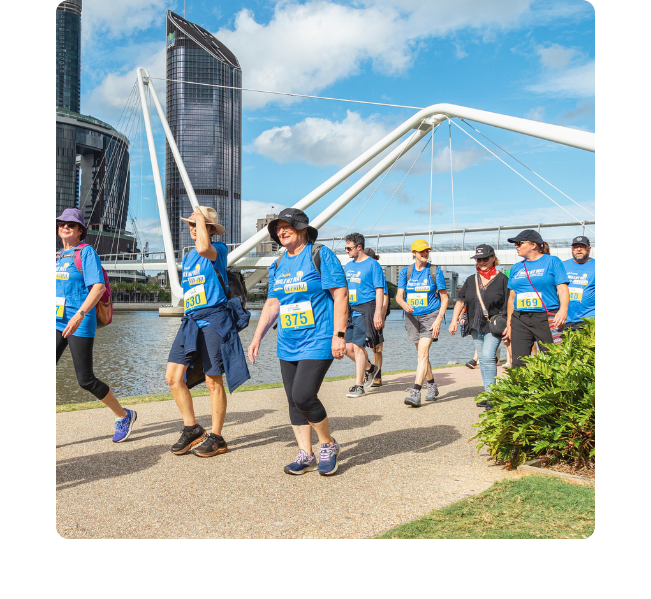
Take a one-hour self-guided walk along the Brisbane River. Along the way, you’ll stop at 5 Brisbane landmarks where you will discover five short video reflections and stories sharing how ALWS is supporting communities in Indonesia, Ethiopia, Somalia, Nepal, and Burundi. We might be separated by countries… but we’re all connected!

Not in Brisbane? Not a problem! You can still experience each reflection and video online at any time.

The projects featured are part of ALWS Just One Hour monthly giving program, that invite Australians to donate an hour of their wage each month, with their tax-deductible contribution multiplied 5:1 by an Australian Government grant.

Interactive Map

Reflection Stops

Communities of change in Indonesia

1 Corinthians 12:26-27

If one part suffers, every part suffers with it; if one part is honoured, every part rejoices with it. Now you are the body of Christ, and each one of you is a part of it.

South Bank Beach & PK Hephata, Indonesia


We’re standing next to Brisbane’s manmade South Bank Beach. This is a protected and safe beach within the Brisbane city – some might even call it a haven. This is a place where families gather for fun and exercise on the weekend; a place for building connections within community.

That’s a bit like the work that Australians support at PK Hephata in Indonesia. Hephata is a place for people living with disability to live safely and with support, to learn skills for businesses and employment opportunities, and for all there to thrive within their created community and community at large. Safe, nurturing and inclusive; it’s a place where new bonds and new families are made.

Jhonpandi Silaban - a resident at PK Hephata, Indonesia

Personal story

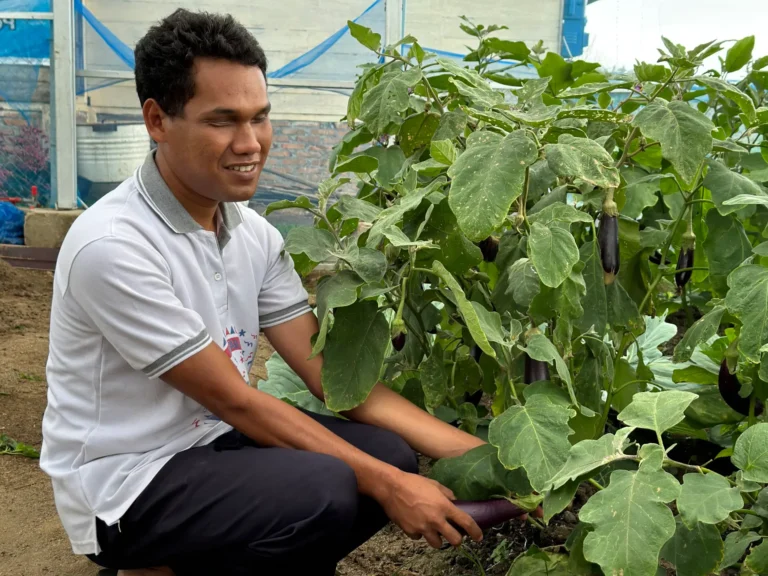
Jhonpandi Silaban is a resident at PK Hephata who lives with blindness.

When Jhonpandi was 3 years old he contracted measles. He explains, ‘when I was sick, there was no medicine available. I felt like screaming as it was so painful. I pulled at my eyes and one of the sockets popped out.’… [in childhood] ‘I was often bullied by other children in my village. I tried to hit them, but I couldn’t see them properly’

Jhonpandi is now 35 years old and has lived at PK Hephata since he was 13. He says, I never got to go to school. The local school in my village would not accept me. They didn’t think that I could learn. [when I came here] My village was five hours away. I missed my family and my village. I felt sad for my mother. After a while, it started to feel like I had a new family. I was so happy to be at school and learning the alphabet and numbers by Braille.

Jhonpandi is now married – he met his wife Lenta – who is also blind – at PK Hephata. They have 4 children and live onsite. Jhonpandi works in the garden and trains others in farming. “I feel the plants and use my senses to know which are the vegetables and which are the weeds. I can feel the differences, and when to harvest. For my children, I always pray to God each night that they will remember PK Hephata and what it has given them. One day they can give back.’

Prayer

Heavenly Father,
We thank you for family and for community, for we are not meant to live in isolation. Thank you for the gift of natural families, and for the gift of created families such as the community at PK Hephata. We thank you for the new life this brings to people with disability who may have been forgotten, ostracised or  marginalised in their first community, [for the skills they learn so that they can contribute to society and to their own wellbeing].
Amen.

Life giving water in Ethiopia

John 4:14

“But whoever drinks of the water that I will give him will never be thirsty again. The water that I will give him will become in him a spring of water welling up to eternal life.”

Goodwill Bridge Lookout & Ethiopia

The Goodwill Bridge on which we now pause was opened in 2001. It is solely for the use of pedestrians and cyclists. Here we reflect on the importance of water and how essential it is for all forms of life.

Water is critical in Ethiopia where climate-related disasters, including drought, prevent families from feeding their children. Through ALWS, supporters are building canals so that farming families can irrigate their lands and grow successful crops. This vital work sustains whole communities, helping to provide food and income for families.

Etagegn Tsedale is a 38-year-old farmer supporting two young boys and her elderly mother

Personal story

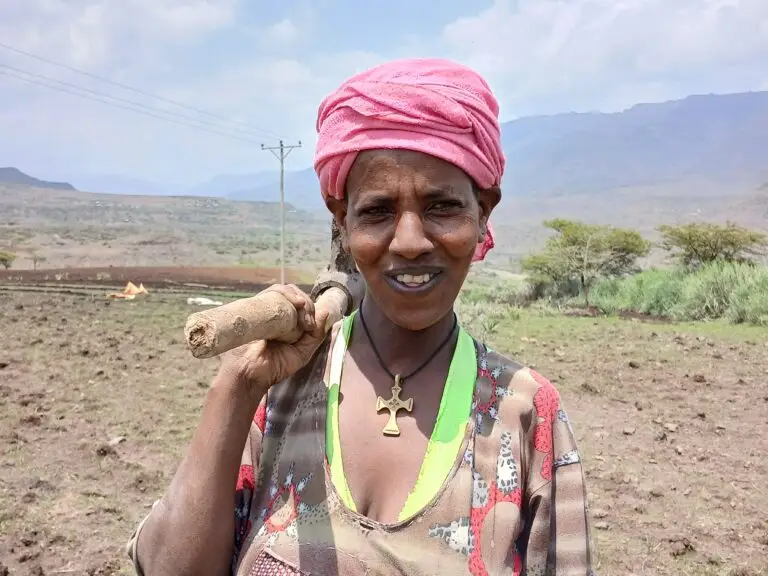
Etagegn Tsedale is a 38-year-old farmer supporting two boys, aged six and four and her elderly mother. Sadly, in recent years, her region has been overcome by conflict and environmental crises. ‘I am poor, because I have low levels of livelihood, and I face shortages of food and basic necessities.”

In 2024, an irrigation water canal was built. The community was supported by ALWS partners LWF Ethiopia to build the canal themselves.

When the irrigation system became operational, it was as if a dam had burst within Etagegn’s spirit. “Our eyes opened. Our muscles stretched, and our stressed minds relaxed. We held onto bright hope for the future.”

Within months – Etagegn had harvested 30 quintals of onions and 12 sacks of tomatoes. She both ate and sold the tomatoes, but stored the onions to sell when prices were higher.

Etagegn now plans to open a vegetable store. “I want to sell and distribute products like onions, potatoes, tomatoes, and peppers to larger towns. I can now grow vegetables twice a year, and also cultivate wheat, teff and other crops.”

Prayer

Lord God,
Too many people around the world have no easy access to reliable and clean water. Thank you for the work of ALWS in providing Etagegn and her neighbours access to water sources through the construction of irrigation canals. Canals that they built themselves for their community. Bless Etagegn and others in her community with abundant harvests so that she can support her family, and the community through opening a store that sells an array of nourishing vegetables and other crops.
Amen.

Luther's Legacy in Somalia - Education for all!

Matthew 19:14-15 

Jesus said, “let the little children come to me, and do not hinder them, for the kingdom of heaven belongs to such as these.” When he had placed his hands on them, he went on from there.

QUT Gardens Point Campus & Somalia

We pause now at the entrance to Queensland University of Technology (QUT) Gardens Point campus. This university campus is home to state-of-the art teaching facilities that equips students to serve as scientists, engineers, lawyers, mathematicians and businesspeople.

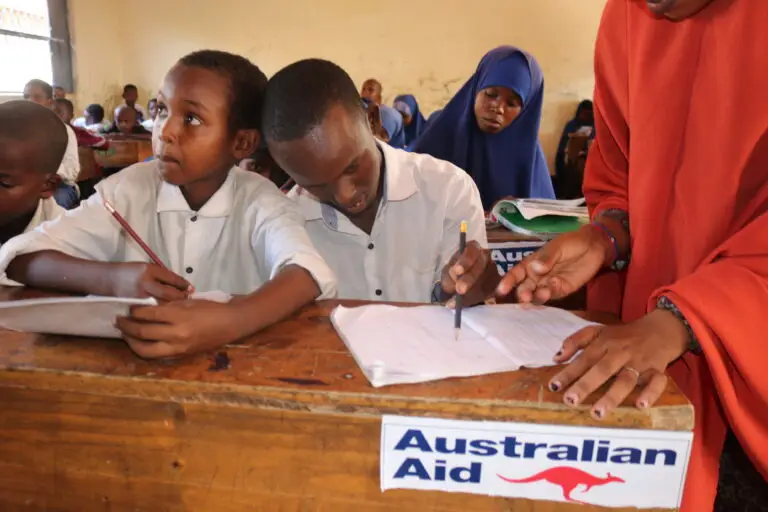
In a similar way, ALWS’ work in Somalia focusses primarily on education, and especially education for children with disabilities: equipping teachers with skills and resources, physically adapting school facilities, and providing students and their families with the aids and support they need to succeed in their learning journey.

Xabib is 17 years old and in Standard 3 in primary school in Somalia

Personal story

Issack, an Inclusive Education tutor in Somalia says that “the biggest challenges of children living with disabilities in Somalia is the stigmatisation and segregation. Many of these children are hidden at home and denied the opportunity to go to school and pursue their dreams.”

That was Xabib’s experience. He’s 17 years old and in Standard 3 in primary school.

When Xabib was 7 months old he was given an unsafe injection, which left him physically disabled. His mum says, “I was in real pain after my son began writhing in pain. As parents, we want to see our children to be healthy. We dream of watching them grow up, play and go to school. That dream suddenly crushed!”

When he was a teenager, Xabib was taken to the EARC centre for physiotherapy, a service that ALWS supports. Here he was also given a school placement so he could start his primary school journey.

“I feel good now that I have an opportunity to study just like any other child. Learning has long just been a pipe dream but my resilience and passion for education got me here today.”

Xabib’s mum has tears of joy for him when she sees him revising his books at home.

Prayer

Heavenly Father, 
We know that in your eyes all people, and all children are precious no matter their colour, creed, or ability. Give us eyes that see just like you. Be with the children of Somalia, especially those like Xabib who have either physical or mental disabilities. Give them opportunities to heal and manage their disabilities, and the means with which to reach their goals – because all people have dreams and aspirations.

We thank you for teachers just like Issack, who started his career as an ordinary school teacher, before receiving specialised training through LWF. We pray blessings upon Issack and others like him who says “teaching in such inclusive environment makes me proud since it benefits all students and values their individual strengths and contributions and makes the learning experience richer and more diverse for everyone.”
Amen.

#MeToo - Empowering Women in Nepal

Galatians 3:28

“There is neither Jew nor Gentile, neither slave nor free, nor is there male and female, for you are all one in Christ Jesus.”  

Sheila Statue & Nepal

We’ve stopped in front of a five-metre high, five-tonne bronze sculpture named ‘Sheila’. This statue has been described as, ‘earthy and primal’, ‘the essence of female fertility, ‘strange’ and ‘ugly’.

The artist behind Sheila says of her design “I was thinking… what kind of figures do we want to see up there? For my daughter, I wanted her to see a powerful female figure but at the same time, Sheila is not perfect. She’s kind of like a superhero – but she’s also not at all. She’s a bit … daggy.”

In Nepal, ALWS works through local partner LWF Nepal to reduce gender-based violence and give visibility and autonomy to women.

Himlata Chaudhary has a dream.

Personal story

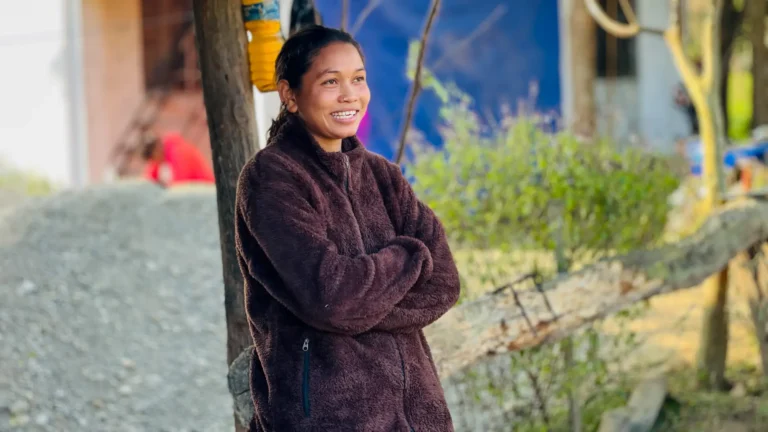
Nepalese woman Himlata Chaudhary has a dream. She dreams of a Nepalese society free from bonded labour, where girls grow up safe and educated.

Himlata attends school with her six-year-old daughter, learning their lessons together. Himlata says “Education doesn’t ask for age – it asks for courage”.

And courage is what Himlata has. For Himlata is also a survivor.

When she was a young girl Himlata was sold into bonded labour – she became a Kamalari. For three years she worked in other people’s homes in western Nepal.

Himlata shares, “I was silenced. I was powerless. Education was never an option for me”

Those memories haunted her for years, leaving her feeling small and voiceless.

Himlata’s life began to change when she encountered LWF Nepal’s Transformative Education Program. Himlata explains, “for the first time, I found a space where my voice mattered.”

She is now a determined advocate, campaigning against gender-based violence and leading community discussions on rights.

Through involvement in the program, Himlata grew into a facilitator, guiding other women and marginalised communities through literacy and awareness classes. One day, during a session, Himlata uncovered a case of double marriage. She gave courage to the woman involved to take legal action.

Himlata says firmly, “I know what it feels like to be silenced. I couldn’t let her go through that”.

Prayer

Heavenly Father,
We bring before you the women and girls of Nepal, who struggle with an unjust social and cultural system that tries to silence them.

Just like the Sheila statute on the banks of the Brisbane River, let the women of Nepal rise up tall, strong and unmissable; give them voices, and give those in power listening ears to hear their voices.

We thank you for Himlata who has been able to use her experiences to become an advocate for herself and others; we thank you that she had the courage and support to rise above her circumstances and now stands tall  for herself and for other women, giving them courage, support and an avenue to seek justice.

Please add our voices, hands and hearts here in Australia, so that #wetoo join together, united for a safer world for women and girls in Nepal.
Amen.

Bridges of resistance in Burundi

Romans 8:39

Neither height nor depth, nor anything else in all creation, will be able to separate us from the love of God that is in Christ Jesus our Lord.

Neville Bonner Bridge & Burundi

This bridge is named in honour of Queensland Senator Neville Bonner. In 1970 he became the first Aboriginal Australian to become a member of parliament. He was jointly named Australian of the Year in 1979 and received an Order of Australia in 1984.

In Burundi, ALWS is teaching modern farming methods to the community’s most at-risk farm families to achieve farm success, and security for their family. Sadly, recent conflict in neighbouring Congo has seen Congolese refugees flee into Burundi. Despite being one of the least developed countries on earth, Burundi has opened its borders and ALWS, through our local partners is assisting.

As we stand on the bridge, we remember pathways and connections between indigenous and non-indigenous populations: just like host communities in Burundi, supporting Congolese refugees.

We think too of bridges that create linkages between supply and demand: between skills in improved farming techniques in Burundi and linkages to new market networks – providing food security and income for refugee and host populations alike.

Ndagijimana Jean lives with his family of 5 children in Burundi.

Personal story

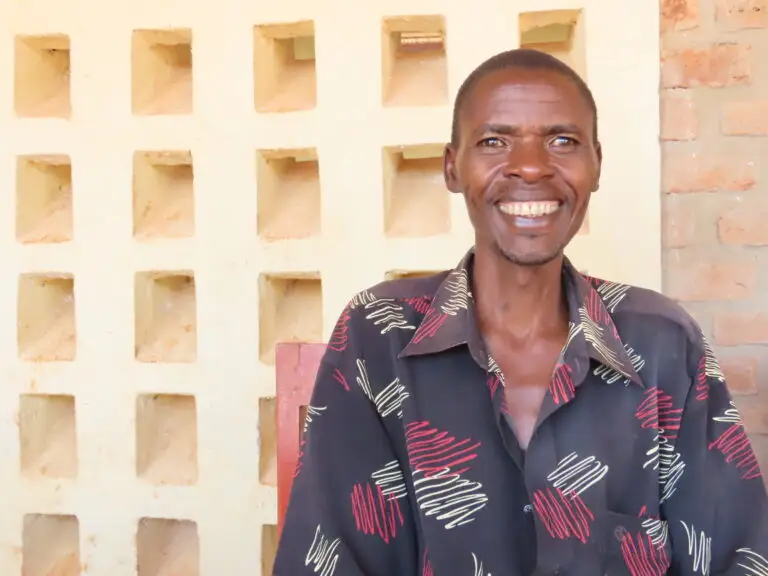
Ndagijimana Jean lives with his family of 5 children in Burundi. A former refugee, Jean is unable to afford schooling for his children aged between 8 and 16 years old.

Jean says “I am poor, my family is not good. I hope to do something which can help me develop my livelihood. I have no capital to do it. Maybe get animals, to continue to cultivate, but I have no seeds, no manure.”

Jean is participating in an ALWS supported livelihoods program. Through cash for work he has been able to buy a pig and support his family. He is also learning about climate resilient agriculture and has become a member of a farming co-op. The co-op members work together to plant beans, maize, cassava and taro.

Jean now says, “I ask that you continue to support like what you do with others. Now I begin to be part of the groups. I can contribute by working as labourer.”

Prayer

Heavenly Father,
We thank you for the metaphorical bridges that are giving hope to people in Burundi just like Jean and his family. Through programs supported by ALWS that teach skills, provide necessary start-up equipment and engage local communities in determining the best pathways forward, we ask that bridges of resilience can be built – giving a pathway from despair to one of courage and hope.

Amen.

Just One Hour

Just One Hour is a simple way you can change lives. By giving the value of one hour of your time each month, you help families overcome poverty with food, clean water, education, and hope.

Every month you’ll receive a short story showing the difference your hour makes — like a child going to school, a mum growing her garden, or a family finding safety.

It’s easy, it’s personal, and it’s powerful. Your hour becomes hope.

the difference you make